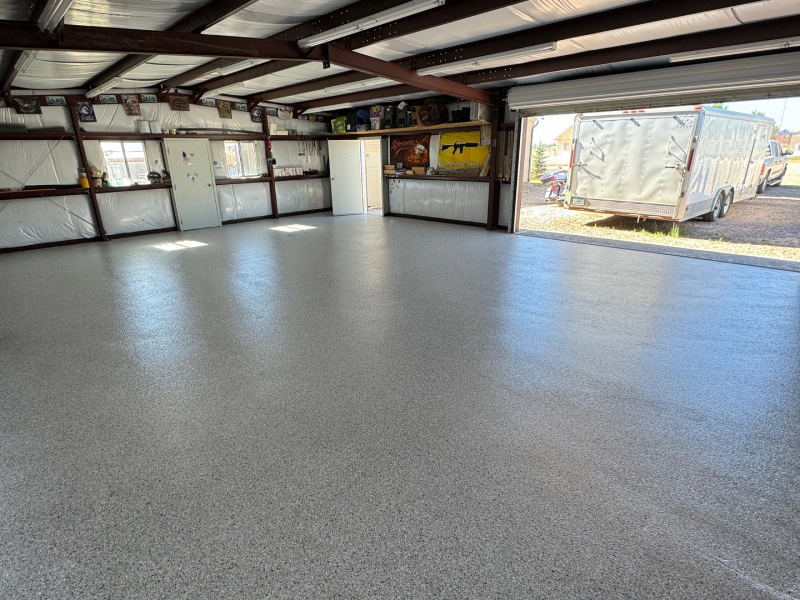
Mistake 1: Skipping Proper Surface Preparation
The single most destructive mistake homeowners make is rushing into epoxy floor installation without adequately preparing the concrete surface. This error accounts for the majority of premature coating failures, leading to peeling, bubbling, and delamination within months of application. When epoxy cannot bond properly to the substrate, your investment simply lifts away from the floor in sheets.
Concrete surfaces harbor oils, sealers, efflorescence, and microscopic contaminants that create an invisible barrier between your coating and the slab. In Newcastle and surrounding Wyoming areas, garage floors frequently contain road salt residue and petroleum deposits from vehicles, compounding this challenge. Without thorough cleaning and profiling, even the highest-quality epoxy flooring services cannot achieve lasting adhesion.
Proper surface preparation requires diamond grinding or shot blasting to open the concrete’s pores and create a textured profile. This mechanical process removes surface laitance and ensures maximum bond strength. Chemical etching alone rarely provides adequate preparation for garage floor coating applications. The concrete should feel like 80-grit sandpaper when properly profiled.
Professional flooring contractors understand that preparation work typically consumes 60 to 70 percent of project time. Moisture testing is equally critical; concrete with excessive vapor transmission will push epoxy away from below. A simple plastic sheet test left overnight can reveal moisture issues before you commit to coating. When you invest in proper preparation, your decorative epoxy flooring will maintain its flawless appearance for decades rather than failing within the first heating season.
Mistake 2: Choosing the Wrong Coating System for Your Climate
Not all epoxy systems perform equally across different environmental conditions, and selecting the wrong formulation for Wyoming’s temperature extremes will result in coating failure. Standard water-based epoxy products may seem economical, but they lack the chemical cross-linking density needed to withstand the thermal cycling common in Newcastle garages, where summer heat exceeds 90 degrees and winter temperatures plunge below zero.
Solvent-based and 100-percent-solids epoxy systems offer superior performance in regions with significant temperature fluctuations. These formulations cure through chemical reaction rather than evaporation, creating a tougher, more flexible film that expands and contracts with the concrete substrate. When cheaper products fail, you will observe a characteristic spiderweb cracking pattern, particularly near overhead doors where temperature swings are most severe.
Polyaspartic floor coating represents an advanced alternative that cures reliably across a wider temperature range and offers exceptional UV stability. Unlike traditional epoxy, polyaspartic technology allows for faster installation timelines while delivering superior abrasion resistance. This matters significantly for homeowners who store ATVs, snowmobiles, and work trucks that track in corrosive road chemicals throughout winter months.
An experienced epoxy flooring company will assess your garage’s specific conditions, including sun exposure, ventilation, and typical use patterns, before recommending a coating system. Metallic epoxy floors, while visually stunning, require specific product formulations to maintain their distinctive aesthetic under harsh conditions. The modest additional investment in climate-appropriate materials prevents the considerable expense of stripping failed coatings and starting over within a few seasons.
Mistake 3: Ignoring Temperature and Humidity Requirements During Installation
Epoxy chemistry depends on specific environmental conditions to cure properly, and installing outside the manufacturer’s temperature and humidity windows guarantees disappointing results. When concrete temperatures fall below 50 degrees or ambient humidity exceeds 85 percent, the curing reaction slows dramatically or stops altogether, leaving a tacky surface that never fully hardens. Conversely, excessive heat accelerates cure times so rapidly that the coating becomes difficult to apply smoothly.
Spring and fall present particular challenges in the Newcastle area, where daytime warmth can feel ideal while concrete slab temperatures remain too cold from overnight lows. A surface thermometer provides accurate readings; relying on air temperature alone leads to miscalculation. Cold concrete causes epoxy to thicken and become difficult to spread evenly, resulting in visible trowel marks and an inconsistent finish thickness.
Humidity creates additional complications by introducing moisture that interferes with epoxy’s chemical cross-linking. You may observe a phenomenon called blushing, where the cured surface appears cloudy or has a whitish haze. This cosmetic defect cannot be polished away and permanently compromises the coating’s clarity, particularly problematic for decorative epoxy flooring where visual appeal drives the investment.
Professional installation teams monitor conditions continuously and may delay application when parameters fall outside specifications. They understand that garage floor coating applied under ideal conditions will cure to its full hardness and chemical resistance rating. Portable heaters and dehumidifiers can modify the environment when necessary, but these tools add cost and complexity. Patience during installation prevents the heartbreak of a ruined finish that must be stripped and replaced before you ever park your first vehicle on the new surface.
Mistake 4: Applying Insufficient Coating Thickness
Stretching materials to reduce costs by applying thin coatings creates a fragile surface that wears through rapidly under normal garage use. Manufacturers specify minimum dry film thickness for good reason: thinner applications lack the structural integrity to resist abrasion, impact, and chemical exposure. When coating thickness falls below recommendations, you will notice premature wear patterns in traffic areas within the first year, requiring costly repairs or complete recoating.
A proper garage floor coating system includes a primer coat, one or two body coats, and a clear topcoat, building to a total thickness of 10 to 20 mils depending on the application. Commercial epoxy flooring specifications often call for even greater thickness to handle forklift traffic and heavy machinery. Residential garages in working communities around Newcastle that house welding equipment, woodworking tools, and agricultural machinery benefit from commercial-grade thickness standards.
Thin coatings also telegraph every imperfection in the underlying concrete. Small cracks, minor spalling, and surface irregularities remain visible through insufficient material buildup. Adequate thickness allows the coating system to level minor substrate variations and create the smooth, glass-like surface that defines quality epoxy floor installation. This becomes particularly important for polished concrete flooring aesthetics, where surface perfection determines visual impact.
Material cost represents a fraction of total project expense when you account for labor and preparation work. Attempting to economize by thinning coatings or skipping layers ultimately costs more when premature failure necessitates removal and reinstallation. Professional installers calculate coverage rates precisely and apply materials at specified thickness to ensure the longevity you expect. A properly built coating system will outlast your vehicles and maintain its appearance through decades of daily use, making the initial material investment trivial compared to long-term value.
Mistake 5: Neglecting Proper Topcoat Selection and Application
The topcoat serves as your floor’s protective armor, and selecting an inappropriate product or skipping this layer entirely leaves the underlying epoxy vulnerable to UV degradation, chemical staining, and abrasion. Many homeowners mistakenly believe that epoxy alone provides complete protection, but base coats actually require a sacrificial topcoat to achieve the durability and appearance retention you expect from professional results.
Aliphatic polyurethane and polyurea floor coating formulations offer superior UV resistance compared to epoxy, preventing the yellowing and chalking that occurs when sunlight streams through garage windows. This matters significantly for decorative epoxy flooring and metallic epoxy floors, where color stability determines long-term aesthetic value. Without proper topcoat protection, your stunning metallic finish will fade and lose its dimensional appearance within a few years of sun exposure.
Topcoat selection also determines your floor’s final texture and slip resistance. High-gloss finishes showcase the beauty of decorative systems but can become slippery when wet. Adding aluminum oxide or polymer grit to the final coat creates texture that improves traction without diminishing visual appeal. Wyoming winters bring snow, ice melt, and moisture into garages daily, making slip resistance a practical safety consideration rather than optional enhancement.
Polyaspartic floor coating technology has revolutionized topcoat performance by combining rapid cure times with exceptional hardness and chemical resistance. These advanced topcoats allow you to return vehicles to the garage within 24 hours while providing scratch resistance that traditional urethane products cannot match. Professional epoxy flooring services incorporate topcoat selection into the system design process, ensuring that every layer works synergistically to deliver maximum performance. When you invest in proper topcoat application, your garage floor will maintain its showroom appearance through countless heating cycles, chemical spills, and the daily punishment of vehicle traffic.